
Stability strategy implies continuing the current activities of the firm without any significant change in direction. If the environment is unstable and the firm is doing well, then it may believe that it is better to make no changes. A firm is said to be following a stability strategy if it is satisfied with the same consumer groups and maintaining the same market share, satisfied with incremental improvements of functional performance and the management does not want to take any risks that might be associated with expansion or growth. Stability strategy is most likely to be pursued by small businesses or firms in a mature stage of development. Stability strategies are implemented by ‘steady as it goes’ approaches to decisions. No major functional changes are made in the product line, markets or functions. However, stability strategy is not a ‘do nothing’ approach nor does it mean that goals such Continue reading
Business Strategies
Case Study: Nissan’s Successful Turnaround Under Carlos Ghosn

Nissan is a famous automobile manufacturing company which was founded in 1933. After the Second World War, Nissan expanded its operations globally. Nissan was very well known for its advanced engineering and technology, plant productivity and quality management. However, during the previous decade, Nissan management has emphasized on short-term market share growth, instead of profitability or long-term strategic success. Nissan’s designs had not reflected customer opinion. In addition, Nissan managers tended to put retained earnings into keiretsu investing (equity of suppliers), rather than reinvesting in new product designs as other competitors did. These inappropriate strategies combining with the Asian crisis influence on a devaluation of the yen led Nissan to the edge of bankruptcy. Nissan was in need of a strategic partner that could lend both financing and new management ideas to foster a turnaround. Furthermore, Nissan sought to expand into other regions where it had less presence. In order Continue reading
Strategic Marketing Tools – Ansoff Matrix and BCG Matrix

Ansoff Product-Market Expansion Grid A useful planning tool in respect of markets and products is the matrix developed by Igor Ansoff, who is regarded by some as the ‘Father of Strategic Management’. Fully titled the Ansoff Product-Market Growth Matrix, the tool was first published in Harvard Business Review, 1957, in Ansoff’s paper Strategies for Diversification. The Ansoff Product-Market Expansion Grid or Ansoff Matrix helps to understand and assess marketing or business development strategy. Any business or part of a business can choose which strategy to employ, or which mix of strategic options to use. This is a fundamentally simple and effective way of looking at strategic development options. Each of these strategic options holds different opportunities and downsides for different organizations, so what is right for one business won’t necessarily be right for another. Think about what option offers the best potential for your own business and market. Think about Continue reading
Defenses Against Takeover Bids – Anti Takeover Strategies

A firm having all or any of the following features may provide a temptation to an acquiring firm to take-over the former: The target firm has under performed other shares and the overall market in terms of return the shareholders in the preceding years. The target firm has been less profitable than other firms, and The promoter/owner group has lower shareholding in the target firm and the public has a higher portion. If an acquiring firm makes an offer for negotiated merger to the management of the target firm, it is up to the latter to accept or not to accept the offer. The target firm may not find the offer to be attractive and hence it may reject the offer. However, the acquiring firm may still persists with the idea either by making a tender offer or attempting a hostile take-over bid. In such a case, it is the Continue reading
Case Study of Rolls Royce: Innovating for the Future
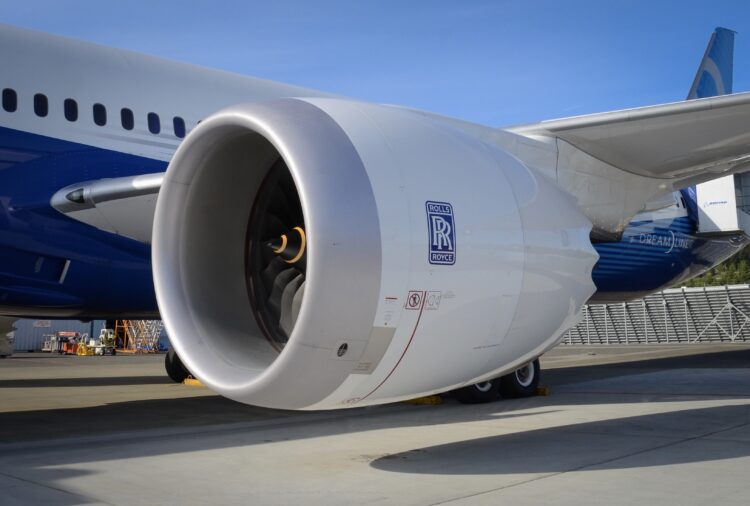
Rolls Royce is a market leader in propulsion and distributed energy systems for both the defense and civil aerospace markets. Their commercial markets cover nuclear, gas turbine, and diesel technologies to power everything from small planes and trains to entire cities. The aerospace applications for innovation are where Rolls Royce has made significant investments and reaped interesting rewards. On the defense side of their business, they have over 16,000 engines in service. In the civil aerospace side of their business, they provide engines to airlines, private business and engines for helicopters. Major Changes in Industry The nature of the aerospace industry has relatively high barriers to entry as the cost for entry is high and requires specific skills and expertise. Nonetheless, the industry has been experiencing growth as the demand for flights increases resulting in the rise of aircraft manufacturing. Several factors have contributed to uncertainty in the aerospace industry Continue reading
Case Study: Success Story of Google Search Engine

One of the most popular search engines is Google. Unknown to many, the term is coined by Milton Sirotta, the nephew of Edward Kasner who is an American Mathematician. The term is in reference with the number which is represented by the number 1 followed by 100 zeros. The same utilization of the term reflects the mission of the company to deliver immense and infinite resources to be available online. The founders of the company, Larry Page and Sergey Brin, were not in good terms back then when they met as graduate students of computer science in Stanford University in 1995. They used to argue on everything that they are discussing. The strong personalities always clashed. But eventually, they have found a common ground. The retrieving of various yet important information from massive set data has been the big challenge that they were up to at that time. So, on Continue reading